

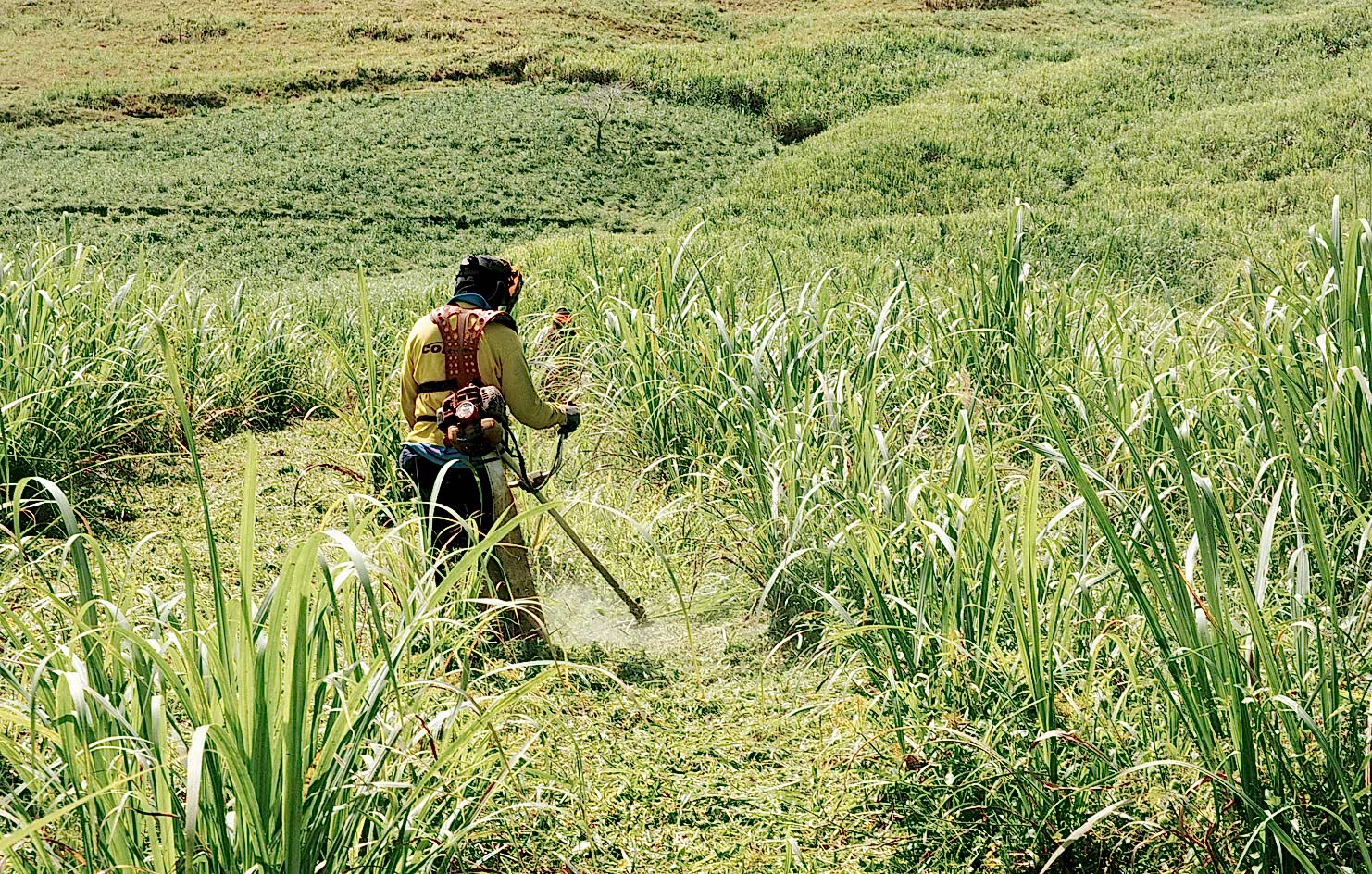
We have been buying organic whole-cane sugar from Assukkar for twenty years now and it is always a delight to see the fields and factory where this incredible product is produced. This is a hot and humid part of Costa Rica. It is beautifully lush with an extraordinary range of greens due to the diversity of crops planted and surrounding natural forests.
Taking freshly cut sugar cane to a teaspoon of sugar is a process which is relatively straightforward but almost entirely manual at Assukkar. Most sugar in Costa Rica is grown at an altitude of 50m in the flatter lowland areas of the country where harvesting machinery is easily used, but Assukkar is planted at 850m to 1000m which is nearly reaching the highest altitude sugar can grow at. With altitude comes challenging terrain which makes it impossible for machinery to be used and so all farm work including planting, weeding, and harvesting is done by hand.
The workday starts promptly at Assukkar, with the first cuts at 5.30am, and finishes at 11.30am. Such an early start helps to avoid the hottest and most humid part of the day. The cane is cut by machete and transferred to large skeletal carts for transfer to the ingenio (sugar-mill). Each cart holds two tonnes of cane, which is a day’s work for a sugar harvester working by hand. After cutting, the cane is taken to the ingenio for crushing. The resulting juice then goes through a series of boilers which further condenses the liquid until it is the consistency of caramel. This last step is very exciting. The boiling caramelised sugar is unloaded into vats where it is very quickly paddled which removes the steam and leaves a solidified but crumbled mass of dulce. The dulce is then sieved, graded and bagged. It is sold as dulce (sweet) in Costa Rica, and whole-cane sugar in the UK.
Assukkar remains a family owned and managed business. Sugar has been grown in the area for 100 years, and they now have 327ha growing organically. The family puts a lot of effort into its certifications; they have been producing organic sugar for thirty years now and were one of the first in Costa Rica to do so. Assukkar also has 200ha which has been left to a natural regrowth of forest and another 33ha recognised under the Payments for Environmental Services (PES) programmes. The PES is a national initiative very similar to the UK’s Countryside Stewardship and Environmental Stewardship programmes. The family are now working towards Regenerative Agriculture, a farmer-led plan which can help farmers organise their approach to sustainability. There are a few organisations offering a certification against a set of standards concentrating on regenerative agriculture, but it is yet to be formally recognised in the UK and there isn’t a more official acceptance of the term.
Assukkar has an informative website with wonderful drone footage showing the cane growing and harvest. The website also has a video of the juice extraction, and a small section showing the traditional method which used oxen to drive the trapiche (cane mill).
We enjoy Assukkar sugar in coffee of course, and on the occasional bowl of porridge, but it is particularly good in biscuits with its complex, caramel-like flavour, and it adds depth to a hearty cake. Due to its unrefined nature, the sugar can clump and form bricks of sweetness, but a few knocks with a kitchen mallet or end of a rolling pin will sort that out.
Monmouth x